School Tour Initiative
E-waste literacy and environmental sustainability, taught inside Lagos secondary schools.
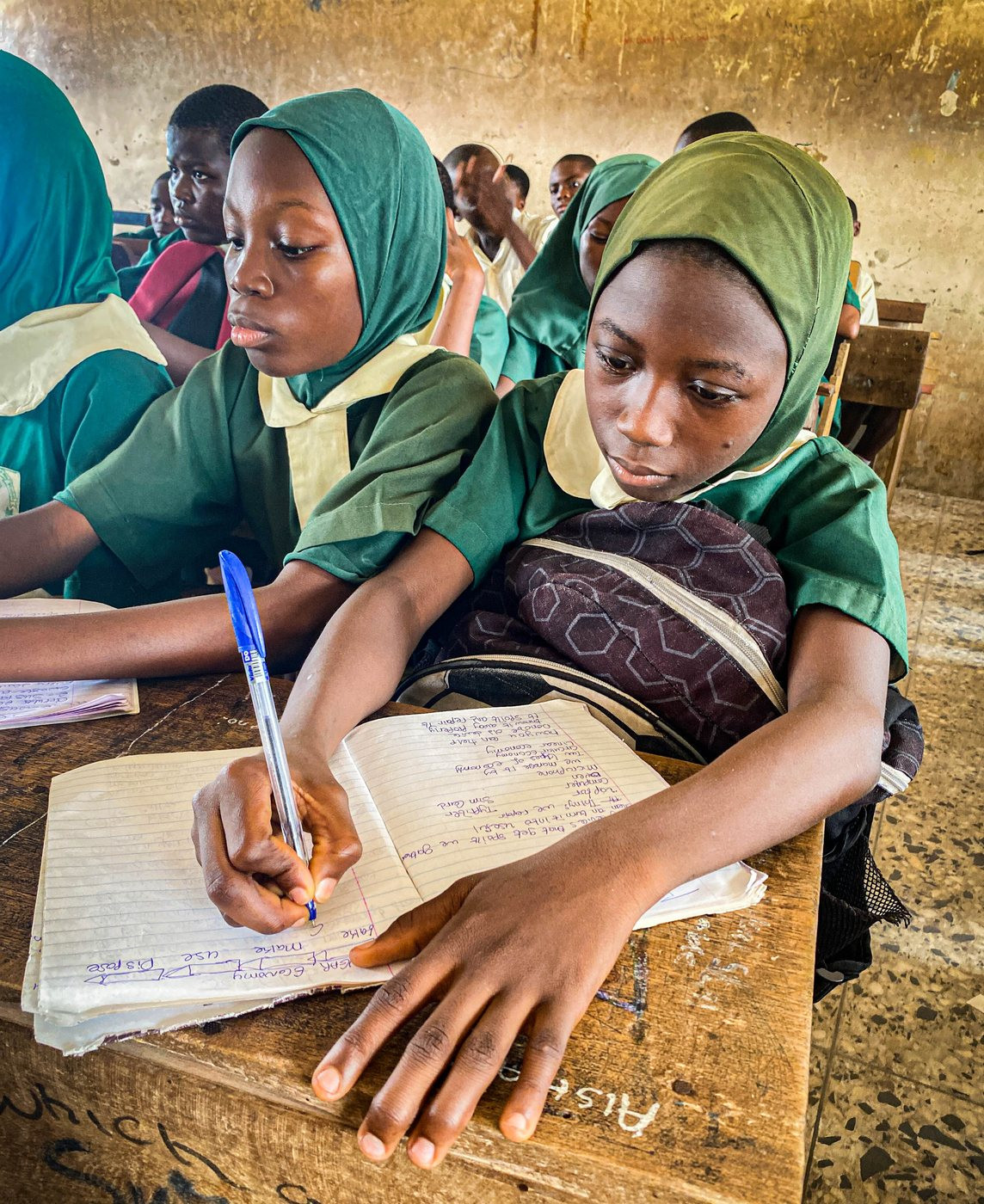
Nigeria's digital consumption is rising faster than its capacity to deal with what that consumption leaves behind. Devices arrive, devices fail, and what happens next is usually a dump site or an open fire. The School Tour Initiative goes into secondary schools and closes the gap between knowing a device is finished and knowing what to do with it.
Sessions are interactive rather than lectured. Students work through what a device is made of, where its materials go, why e-waste matters in the neighbourhood they live in, and what the circular economy asks of them as consumers. Selected students are then trained as peer educators, so the session does not end when the team leaves the compound.
The initiative is measured on movement, not attendance. Every school is assessed before and after, so the change in what students know is a number rather than an impression.
Why this exists
The conditions the programme was designed against.
Knowledge gaps
Environmental sustainability and the circular economy are largely absent from the formal curriculum, so most students have no foundation for understanding how electronic consumption turns into environmental damage.
Behavioural gaps
Awareness and action come apart. E-waste goes out with household waste out of convenience and habit, and dumping, burning, and informal dismantling are normalised inside communities.
Policy awareness
Waste management guidelines exist, but awareness and enforcement are weak at community and institutional level. Students and teachers alike are often unaware of what the rules already say.
What the programme is for
What the programme sets out to achieve.
Raise e-waste literacy
Improve e-waste and environmental sustainability literacy among secondary school students, measured by pre and post session assessment rather than attendance.
Change consumption behaviour
Increase student participation in follow-ups, surveys, inter-school debates, competitions, and quizzes, so engagement continues past the session itself.
Change disposal behaviour
Increase practical knowledge of proper e-waste disposal, tracked through follow-up surveys alongside the pre and post assessments.
Build peer educators
Train selected students as environmental champions who carry the material back into their own schools and communities.
Targets
Figures the programme is working towards. These are planned, not delivered.
1,000
Students across 10 schools within 12 months
60%
Literacy improvement, measured pre and post session
10
Schools onboarded, engaged, and evaluated
Delivered in 2025
Work that has already happened, with the dates it happened on.
Three schools reached
Whanyinna School in Makoko, Lagos City School, and Gbagada Junior High School.
100+ students
Engaged in structured e-waste and digital sustainability sessions.
5 laptops
Refurbished laptops donated.
How it runs
The activities that make up the programme.
School sensitisation visits
Interactive sessions on e-waste, environmental sustainability, and the circular economy, delivered inside the school.
Eco-friendly learning materials
Flyers, posters, and digital content developed and distributed, produced as reusable materials rather than throwaway print.
Peer educator training
Selected students trained as environmental champions to continue the work between visits.
Every visit, 2026
The schools the team has been into this year and when. A visit without a confirmed date is listed without one rather than given a likely one.
May 2026
Jibowu Junior High School
Yaba
July 2026
Wesley Girls' Senior Secondary School
Lagos City Senior College
Sabo, Yaba
Aiyetoro Senior Grammar School
Ebute Metta
Oke-Odo Junior High School
Mainland Senior High School
Fadeyi
Mainland Junior High School
Fadeyi
Aiyetoro Senior Grammar School
Ebute Metta
August 2026
Victokev Schools
Ikorodu
September 2026
Birrel Avenue Senior High School
Sabo, Yaba
Eletu Odibo Senior High School
Abule Oja, Yaba
From the field
Students gathering outside their schools and in classrooms during the sessions we run in Lagos.
Select any frame to open it.
Who it is for
The sessions run inside the school, so the room holds the students the programme is written for and the teachers and administrators who make the visit possible. Selected students are then trained as environmental champions and carry the material back into their own schools and communities between visits. That is how it reaches the second group below, none of whom sit in the session itself.
Primary
- Secondary school students, JSS1 to SS3, aged 10 to 18
- Teachers and school administrators, as facilitators and enablers
Secondary
- Parents and guardians
- Surrounding school communities
Aligned goals
The United Nations Sustainable Development Goals this programme was designed around.
SDG 4.7
Learners acquire the knowledge and skills needed to promote sustainable development and sustainable lifestyles.
SDG 12.5
Substantially reduce waste generation through prevention, reduction, recycling, and reuse.
SDG 13.3
Improve education and awareness raising on climate change mitigation and impact reduction.
Every programme runs on donated hardware.
If your organisation is retiring devices, that is where a programme starts.